
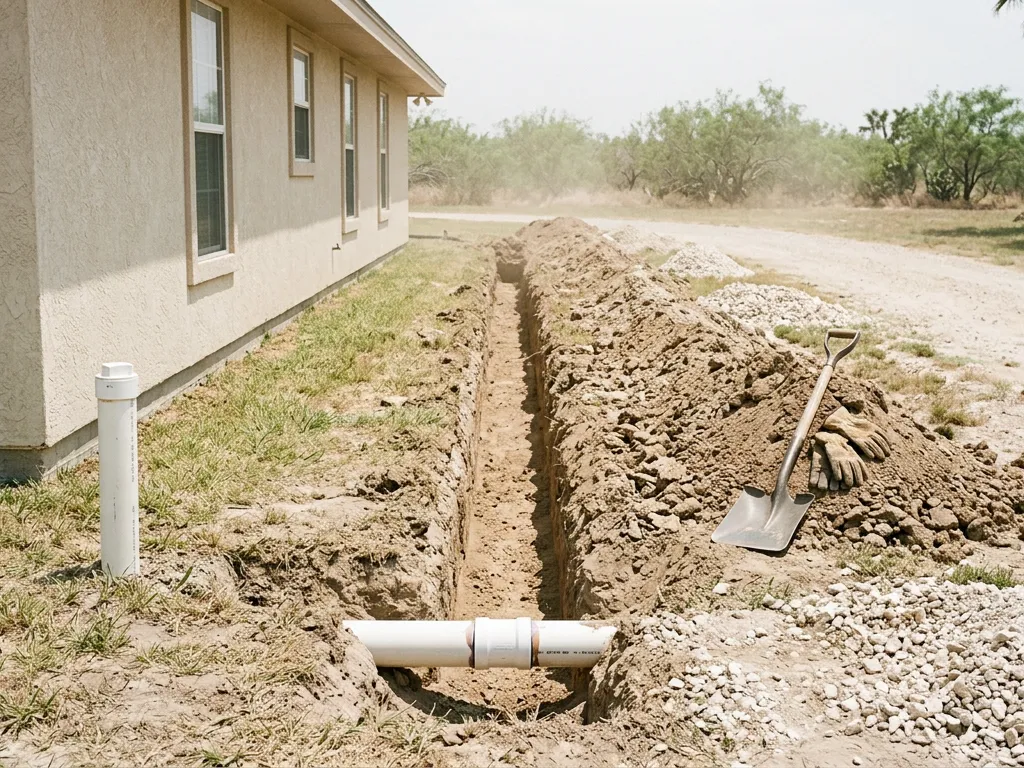
Retiring the tank
McAllen Septic: Septic to Sewer Conversion in McAllen, TX
Moving from septic to city sewer takes two jobs: a plumber's sewer tap and a properly abandoned tank.
- McAllen, Edinburg, Mission and towns within 20 miles
- Licensed, insured local septic contractors
- Conventional and aerobic systems
- Written price before work starts
- Straight answers on TCEQ and county rules
McAllen Septic helps McAllen homeowners who are moving from a septic tank to city sewer reach a local contractor for the septic side of the job. A conversion has two halves. A licensed plumber connects the house to the sewer main under a city permit, and the old tank is pumped and filled under the state abandonment rule. This page covers both halves, the typical cost, the McAllen permit line for eliminating a septic tank, and how nearby cities handle the tap.
Where a sewer main is within reach, a $1,500 to $8,000 connection can retire an aging tank that would otherwise face a $4,500 to $9,000 replacement.
Septic to Sewer Conversion for McAllen Homes
McAllen Public Utility runs about 535 miles of sewer pipe and charges no impact fees. The city's development code does not allow septic systems inside city limits (UDC 5.1.3), and an existing building within 100 feet of a city sewer must connect within 30 days of notice (Sec. 106-143). In the city's extraterritorial jurisdiction a septic permit needs both the county health official and McAllen Public Utilities, on a lot of at least one acre. The work splits cleanly: the sewer connection belongs to a licensed plumber, and the septic contractor handles the old tank.
Septic to Sewer Cost and the McAllen Permit Fees
$1,500 to $8,000
Fixr's usual range for tying a house into a main sewer line; a guide, not a quote. Pumping and filling the old tank, and the city permit, are separate lines on the job.
Fixr's range is a national figure, and Valley contractors do not post prices of their own. The distance from the house to the main, and what sits in between, such as a driveway or a slab, change how much pipe and digging the job takes. The city's own charges are small by comparison. McAllen's permit schedule, effective 2016 and updated 2019, prints two lines that apply. Pumping out the old tank is priced like a cleaning; see septic tank cleaning for that range.
- Sewer Plug, elimination of septic or grease trap
- $39.60 each
- New Sewer
- $15.60
Septic Tank Abandonment Under Texas Rule 285.36
Once the house drains to the sewer, the tank that served it must be closed the way the state requires. Rule 285.36 sets the order. First a TCEQ-registered transporter empties the tank. Next it is backfilled right up to grade with clean material broken into pieces less than three inches across, keeping out anything organic and any construction waste. The same closing applies to seepage pits, cesspools, holding tanks and pump tanks as well as septic tanks, so an older property with more than one buried tank needs each one closed. Keep the transporter's trip ticket as proof the tank was emptied before it was filled.
Who Pulls the Sewer Permit in McAllen, Edinburg and Mission
In McAllen, a sewer tap needs a building or plumbing permit pulled by a licensed plumber. Edinburg handles it a little differently: the city does not perform sewer taps itself, so a licensed plumber pulls a sewer tap permit at the Building Safety Department, which matters for sewer hookups in Edinburg. For Mission and Pharr, ask the city for its tap fee before you budget. TCEQ also counts Mission among the cities acting as their own authorized agents for septic systems, which makes the city office the place to ask about septic to sewer work in Mission.
Septic to Sewer Rules Across Hidalgo County
Outside the cities, state and county rules decide when a home needs wastewater service in place. Texas Water Code 16.343 and the Model Subdivision Rules in 31 TAC Chapter 364 require water and wastewater service before a subdivision in an economically distressed area is approved, and Hidalgo County's subdivision rules take them in. The county order also holds back final light or water clearance until a house is connected to an approved system. Either way, a new home needs an approved place for its wastewater before the utilities are released.
Signs It Is Time to Switch From Septic to Sewer
- The city has run a sewer main down your street
- The tank needs pumping more often than it used to
- The drain field stays soggy whatever the weather
- You just got a quote to replace the tank or the field
- Neighbors on the block have already tied into the sewer
Plan a Septic to Sewer Conversion in McAllen
Once the plumber has the sewer tap lined up, call us and we will find a septic contractor to pump and close the old tank.
Call (956) 758-8136Frequently Asked Questions
Septic to Sewer Questions From McAllen Homeowners
What does switching from septic to sewer cost in McAllen?
Fixr puts connecting a house to a main sewer line at $1,500 to $8,000, a typical national range. In McAllen, the permit schedule lists eliminating a septic tank at $39.60. The septic contractor prices pumping and filling the old tank separately.
Which signs say my home should connect to city sewer?
A sewer main running along your street is the clearest one. A tank that needs frequent pumping, a soggy drain field, or a fresh replacement quote are all reasons to price a sewer connection before paying for the septic work.
Who can connect my house to the sewer in McAllen?
A licensed plumber. McAllen requires a building or plumbing permit for a sewer tap, and a licensed plumber pulls it. McAllen Public Utility charges no impact fees. Ask the city about the permit before any digging starts.
What happens to the old septic tank?
Under Texas rule 285.36 a registered transporter empties it, and then it is filled to grade with clean fill under three inches in size, free of organic matter and building debris. Seepage pits, cesspools, holding tanks and pump tanks are closed that way too.
Does the city of Edinburg tap the sewer line for me?
No. Edinburg does not perform sewer taps. A licensed plumber pulls the sewer tap permit at the city's Building Safety Department and makes the connection. For Mission and Pharr, ask each city for its tap fee before you budget.