McAllen Septic: What to Expect at a Septic Service Appointment in McAllen
Calling McAllen Septic means inviting someone you have not met to open the tank in your yard, so it helps to know the steps before they happen. This guide follows a septic appointment around McAllen from the first phone call to the paperwork you keep afterward. It covers the questions you will be asked, the records that answer them, how to get the lids ready, what the visit involves, and the written price that should come before anyone starts work.
What Happens When You Call This Septic Line
McAllen Septic is a referral line, not a septic company with its own trucks. One phone number reaches local, independent septic contractors around McAllen and the Hidalgo County towns within 20 miles. When you call, we answer, ask what is going on with the system, and connect you with the septic contractor who will quote your job.
From there you deal with that contractor directly. When they can come out depends on the contractor and the job, so ask about timing on the call. The same goes for price: the ranges on this site are typical Texas and national figures, and the number that counts is the one the contractor puts in writing.
Five Questions the Septic Contractor Will Ask
Expect these on the first call. Each one changes what the visit involves or what it costs.
- How big is the tank? Fixr's cleaning ranges split by size: $225 to $400 for 1,000 gallons and $345 to $600 for 1,500.
- When was it last pumped? TCEQ suggests every three to five years for a conventional tank; a long gap can mean heavy sludge.
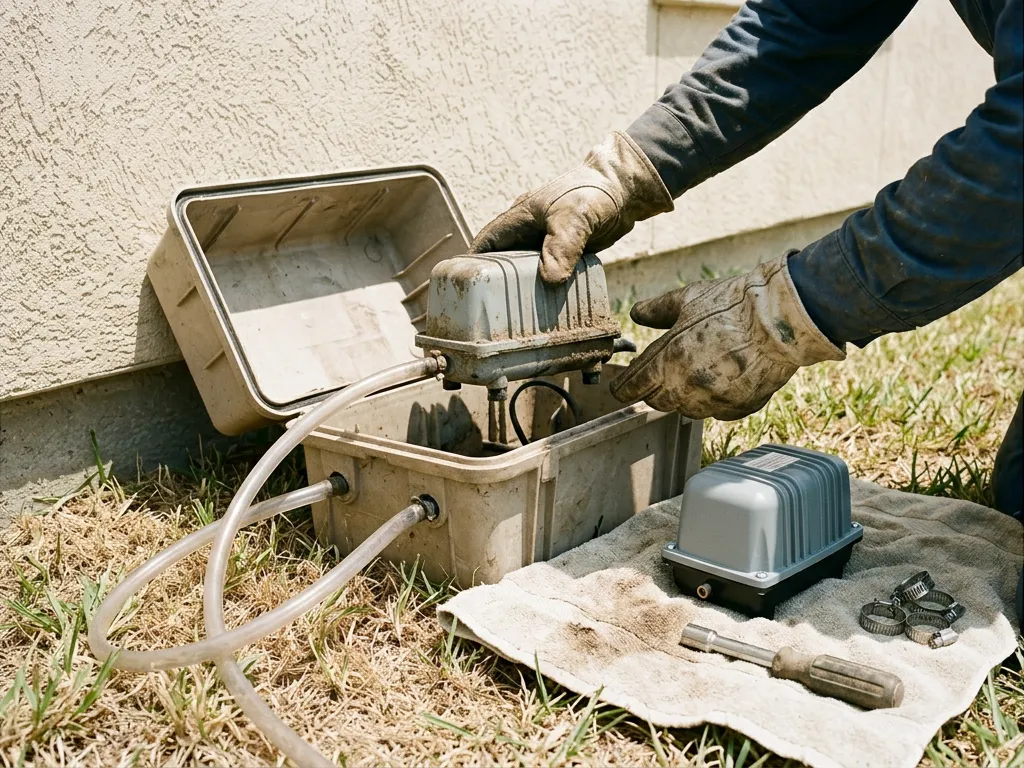
- Is it aerobic or conventional? Spray heads, a control panel and an air pump mean aerobic, which runs on a maintenance contract.
- Can a truck reach it? Mention a locked gate or a tank far from the drive, since the hose has to get there.
- Where are the lids? This Old House puts a buried lid or poor access at $50 to $200 extra.
Have the tank size and last pumping date handy, or not? Either way, call and we will connect you with a local septic contractor for a written price.
Call (956) 758-8136Where to Find Your Septic Records Before the Visit
Most of those answers are already in the house papers. The trip ticket from the last pumping shows the date; every pickup by a TCEQ-registered transporter comes with a homeowner copy. If you bought the house, the Texas REALTORS form TXR 1407 from the sale lists the drain field location, the installer, the approximate age, any maintenance contract and when the tank was last pumped.
Aerobic owners have one more record: the maintenance provider's report, written at least every four months and filed with the permitting authority. For permit records, the office depends on where you live. In unincorporated Hidalgo County it is the Environmental Health Division of Hidalgo County Health and Human Services in Edinburg. TCEQ lists McAllen, Mission, San Juan, Palmhurst and Donna as their own authorized agents. For a home in Hidalgo or another town not on that list, ask the city first whether it handles septic permits.
Getting the Septic Lids Ready
If you know where the lids are, clear anything sitting on them and make a path for the hose. If they are buried, tell the contractor on the call; finding them is part of the job, and the cost of a buried lid is one of the add-ons This Old House lists. If you plan to dig for them yourself, Texas 811 asks for a call at least two days before you dig.
A lid that has to be dug up at every visit is a good reason to add risers, which bring the access up to the surface. Fixr puts septic riser installation at $300 to $600, with plastic risers at $300 to $400 and concrete at $350 to $600. A damaged lid or riser that is a hazard counts as an emergency fix under 30 TAC 285.35, which needs only written notice to the permitting authority, no later than 72 hours after.
On the Day of the Septic Visit
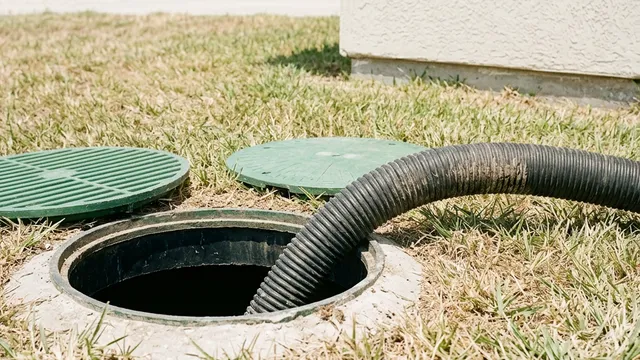
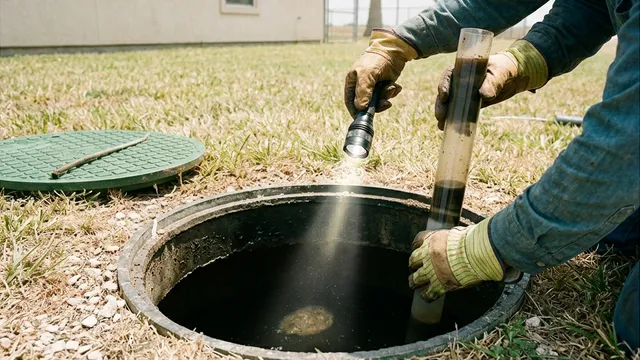
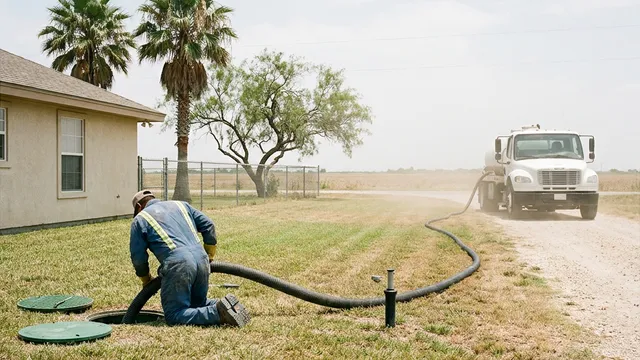
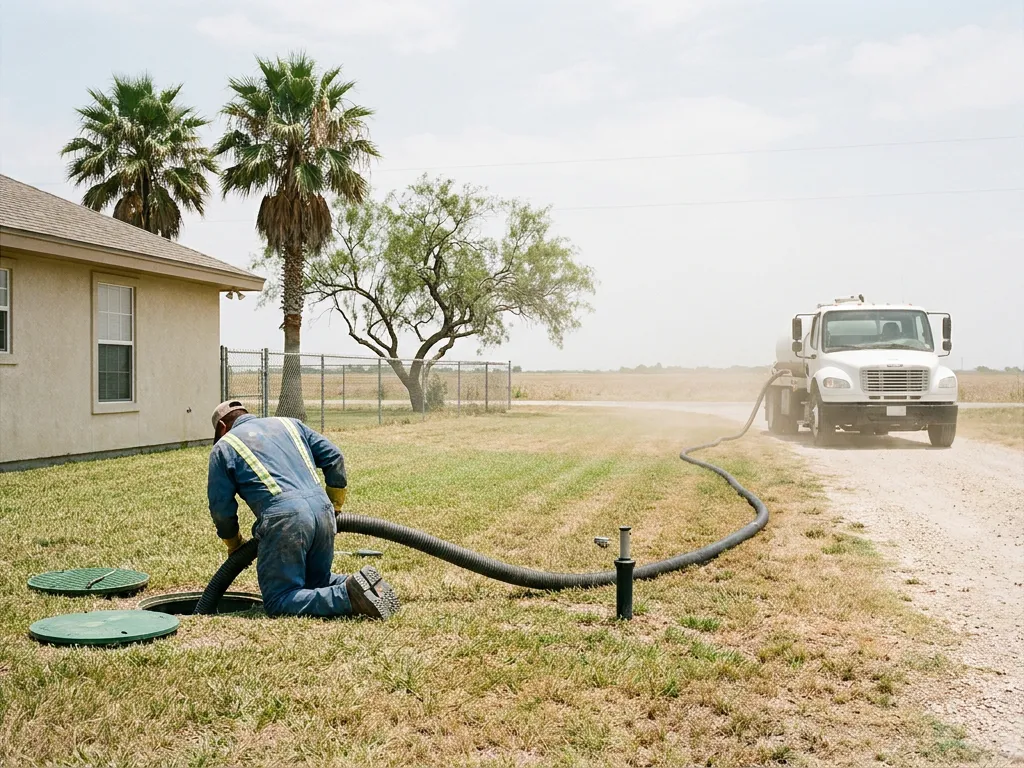
For a pump-out, the transporter's hose runs from the open tank to the truck, and only a transporter registered with TCEQ may pump and haul the septage. An inspection also measures the layers: EPA's guidance calls for pumping when sludge is within 12 inches of the outlet or scum within six inches of it.
An aerobic visit is an inspection and test of the treatment system, with the report the rule requires. If the contractor finds a part that needs replacing, it helps to know what Texas counts as routine. Replacing a pump, filter, aerator line, valve or electrical part is maintenance and needs no permit. Replacing a tank or a drain field is a repair that needs a permit for the whole system, which brings in the permitting authority, a construction inspection with five working days' notice, and an approval notice inside seven calendar days of passing.
The Trip Ticket and a Written Septic Price
Before work starts, the contractor's price should be in writing. Ask what it covers and what could change it. This Old House lists the usual add-ons: $100 to $300 for heavy sludge, and $50 to $200 for a buried lid or poor access. Weekend or after-hours work typically runs 50% to 100% above standard rates, so a visit you can schedule usually costs less than one you cannot. Texas Septic Guide puts emergency service at $450 to $700.
After a pump-out, keep the trip ticket. It starts the clock on the next pumping and answers the first question the next contractor will ask.
Questions Worth Asking Before Septic Work Starts
A few questions protect you on bigger jobs. Is a permit needed, and who pulls it? On an aerobic system, who files the four-month report? Texas requires anyone paid to build any part of a system to be a licensed installer, and Hidalgo County's order requires installers to keep their licence on the job site, so on installation or replacement work it is fair to ask to see it. Every new system also needs a site evaluation by a licensed site evaluator or a professional engineer before design starts.
A septic appointment goes most smoothly when the contractor knows the tank size, the system type and where the lids are before arriving, and when you know the price before work begins. Our septic tank cleaning page explains the most common visit in more detail.
Want a number for your own system? (956) 758-8136